Understanding 2 Inches on a Ruler
By reading this article, you will learn:
- 2 inches on a ruler is 5.08 centimeters.
- The layout and markings of a ruler.
- Practical applications and tips for accurate measurement.
In the realm of measurements, precision is paramount. Whether it’s for a DIY home project or a professional design endeavor, accurate measurements form the backbone of success. At the core of this precision is the concept of inches, a fundamental unit of length widely used in the United States and other countries. As we delve into the world of inches and rulers, a common query surfaces: How long is 2 inches on a ruler?
The exact length of 2 inches on a ruler is, unsurprisingly, 2 inches. However, understanding the layout of a ruler, its markings, and the practical applications of measuring 2 inches is essential for a comprehensive grasp of this fundamental aspect of measurement.
Importance of Accurate Measurements
Accurate measurements are indispensable in countless fields, including construction, engineering, crafting, and design. Inaccurate measurements can lead to costly errors, compromised structural integrity, and flawed aesthetics. Understanding the specifics of measurements, such as the length of 2 inches on a ruler, is essential for ensuring the quality and precision of the final outcome.
Concept of Inches as a Unit of Measurement
The inch, denoted by the symbol "in" or double prime ( ″ ), is a unit of length in the imperial and United States customary systems. It is precisely defined as 25.4 millimeters. Embracing the inch as a fundamental unit of measurement necessitates a comprehensive grasp of its subdivisions and applications.
Addressing the Specific Query: How Long is 2 Inches on a Ruler?
The query regarding the length of 2 inches on a ruler unveils the need for clarity and understanding. By exploring the layout of a ruler, the process of measuring 2 inches, and its practical applications, we aim to demystify this fundamental aspect of measurement.
Understanding the Layout of a Ruler
Basic Markings on a Ruler
A standard ruler typically displays markings in inches and centimeters. The inch scale is subdivided into smaller units, usually 1/16 of an inch, providing the necessary granularity for precise measurements. Additionally, some rulers incorporate markings for millimeters, further enhancing their versatility.
Introduction to Fractions and Decimals on a Ruler
The inch markings on a ruler often incorporate fractions and decimals, offering flexibility in measurement. Understanding how these fractional and decimal increments correspond to specific lengths is crucial for accurate readings.
Measurement Conversion
Converting Inches to Other Units of Measurement
In certain scenarios, it becomes imperative to convert inches to other units of measurement, such as centimeters, millimeters, feet, or meters. This conversion process is pivotal in facilitating seamless communication and collaboration across diverse measurement systems.
Example Calculations for Converting Inches to Other Units
To illustrate the practicality of measurement conversion, let's consider examples of converting 2 inches to centimeters, millimeters, and feet. These examples will underscore the significance of understanding the relationship between different units of length.
Determining the Length of 2 Inches on a Ruler
Locating and Measuring 2 Inches on a Ruler
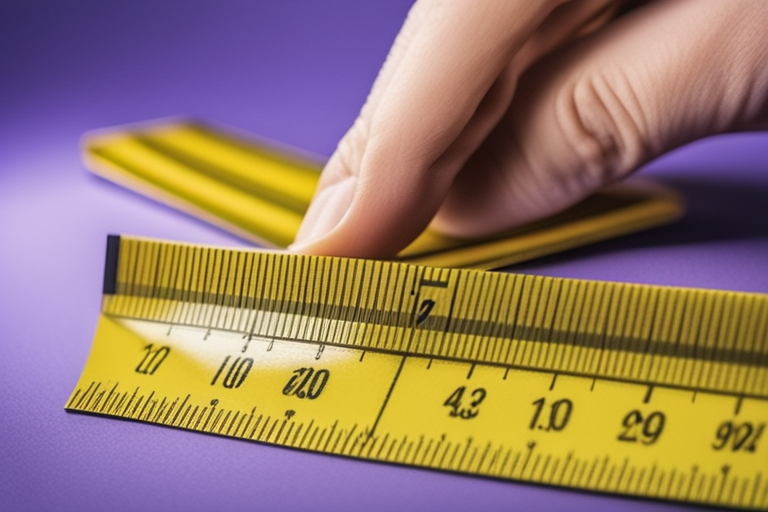
To determine the length of 2 inches on a ruler, one must identify the starting point, often denoted by a prominent mark or numeral, and then count the subsequent markings to reach the 2-inch milestone. This process requires attention to detail and a firm grasp of the ruler's layout.
Visual Aids or Diagrams for Demonstration
Visual aids or diagrams can provide invaluable assistance in comprehending the process of measuring 2 inches on a ruler. These illustrations can elucidate the step-by-step approach, instilling confidence and precision in the measurement process.
| Practical Application | Description |
|---|---|
| Woodworking | Marking material for cutting or shaping |
| Architecture | Delineating dimensions in blueprints |
| Sewing | Measuring fabric for cutting or hemming |
| Engineering | Marking specific lengths for components |
| Crafting | Ensuring precise dimensions for projects |
Practical Applications of Measuring 2 Inches
Real-World Examples for Measuring 2 Inches
The act of measuring 2 inches extends its relevance to numerous real-world applications. From marking material for cutting in woodworking to delineating dimensions in architectural blueprints, the measurement of 2 inches plays a pivotal role in various industries and hobbies.
Importance of Precise Measurements in Construction, Crafting, and Design
In construction, crafting, and design, the significance of precise measurements cannot be overstated. The length of 2 inches on a ruler can influence the structural integrity of a building, the aesthetics of a piece of furniture, or the accuracy of a technical drawing.
Real-Life Example: Precise Measurement in Woodworking
John's Experience
John, a woodworking enthusiast, was tasked with building a custom shelf for a client's home. The design called for a 2-inch overhang on each end of the shelf. Using his ruler, John carefully measured and marked the 2-inch points on the wood before making the cuts. However, when he assembled the shelf, the overhangs did not align properly.
The Lesson Learned
Upon closer inspection, John realized that he had mistakenly used the wrong end of the ruler as the starting point for his measurement. This small error led to a significant misalignment in the final product. After this experience, John learned the importance of understanding the exact length of 2 inches on a ruler and the significance of precise measurements in woodworking projects.
This real-life example demonstrates how a seemingly minor measurement error can impact the outcome of a project, emphasizing the need for accurate measurement techniques as discussed in this article.
Tips for Accurate Measurement
Ensuring Accuracy When Measuring with a Ruler
To ensure accuracy when using a ruler, it is imperative to maintain a stable hand, align the ruler parallel to the object being measured, and verify the starting point for consistency. These fundamental tips form the basis of achieving reliable and precise measurements.
Common Pitfalls to Avoid When Using a Ruler for Measurement
Common pitfalls, such as parallax error, misalignment, and misinterpretation of markings, can compromise the accuracy of measurements. Awareness of these pitfalls empowers individuals to mitigate potential errors and uphold the integrity of their measurements.
Conclusion
Recap of Key Points
The exploration of the length of 2 inches on a ruler has illuminated the foundational principles of measurement, emphasizing the significance of precision, understanding ruler layouts, and leveraging accurate measurements in practical scenarios.
Importance of Understanding Measurement and Units for Practical Applications
Understanding the nuances of measurement and units is indispensable for a spectrum of practical applications, ranging from everyday DIY projects to professional endeavors. Mastery of these fundamentals fosters efficiency, quality, and confidence in the execution of diverse tasks.
In conclusion, demystifying the length of 2 inches on a ruler reinforces the pivotal role of measurements in our daily lives and underscores the value of precision in every endeavor that hinges on accurate dimensions.
Questions & Answers
How long is 2 inches on a ruler?
2 inches on a ruler is equivalent to 5.08 centimeters.
Who uses rulers for measurements?
Rulers are used by students, architects, and engineers for measuring length.
What is the standard length of a ruler?
The standard length of a ruler is 12 inches or 30 centimeters.
How can I convert inches to centimeters?
To convert inches to centimeters, multiply the inches by 2.54.
What if I don't have a ruler for measuring?
If you don't have a ruler, you can use a tape measure or a yardstick as an alternative.
How accurate are rulers for precise measurements?
Rulers are generally accurate for everyday measurements, but for precise measurements, more precise measuring tools may be required.
No comments:
Post a Comment